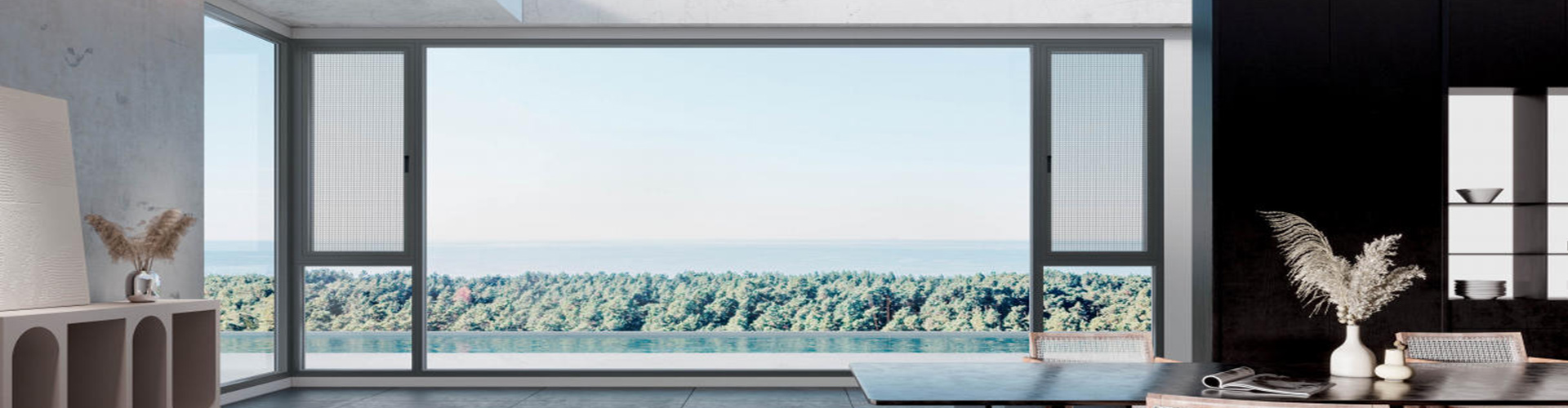
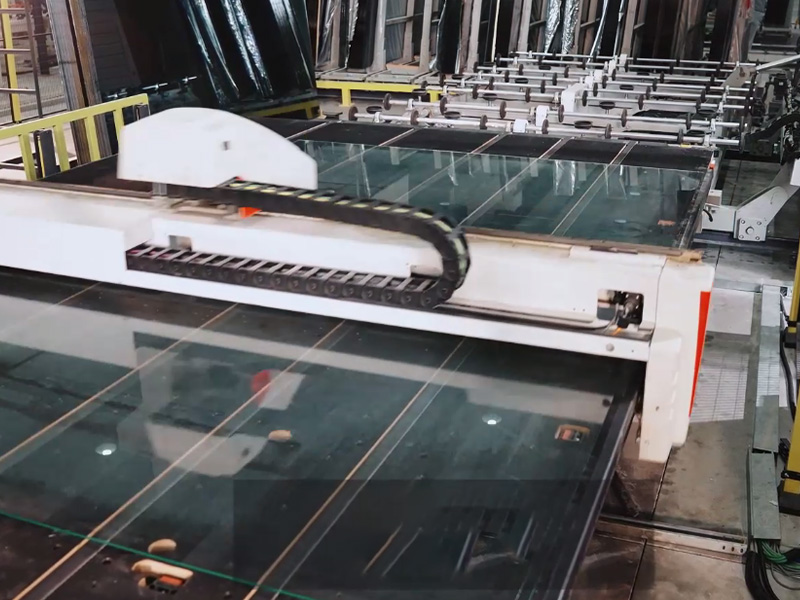
The original glass sheet is precisely cut according to the designed dimensions, and the cutting is automatically completed by a machine.
Step 2: Edge grinding and cleaning
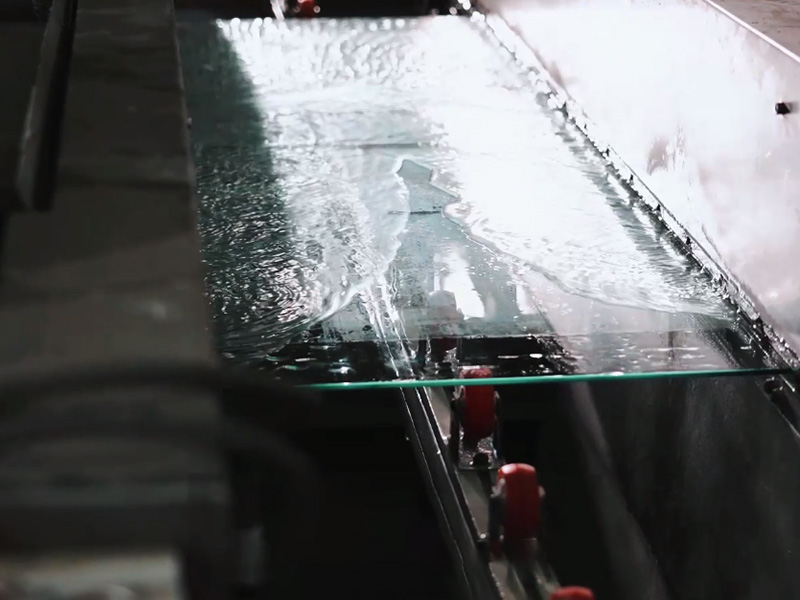
The cut glass is conveyed to the edging machine for grinding and cleaning of its four edges, facilitating subsequent processing.
Step 3: Tempering
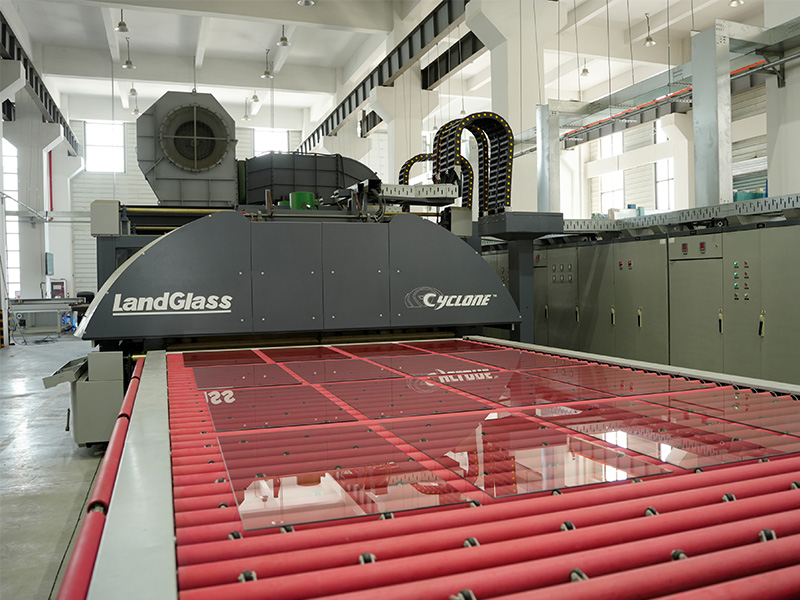
Through specialized equipment, glass undergoes tempering treatment, endowing it with high strength, safety, and thermal stability, making it more suitable for use in engineering and construction.
Step 4: Scratch detection
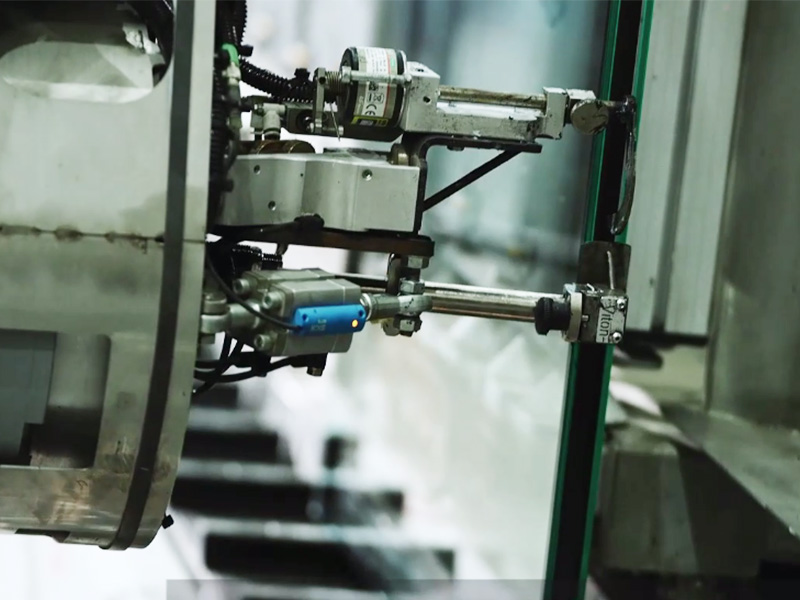
Before manufacturing insulating glass, the glass will be transported to the inspection station to check for scratches and other damages, ensuring the product pass rate.
Step 5: Apply the first layer of sealant
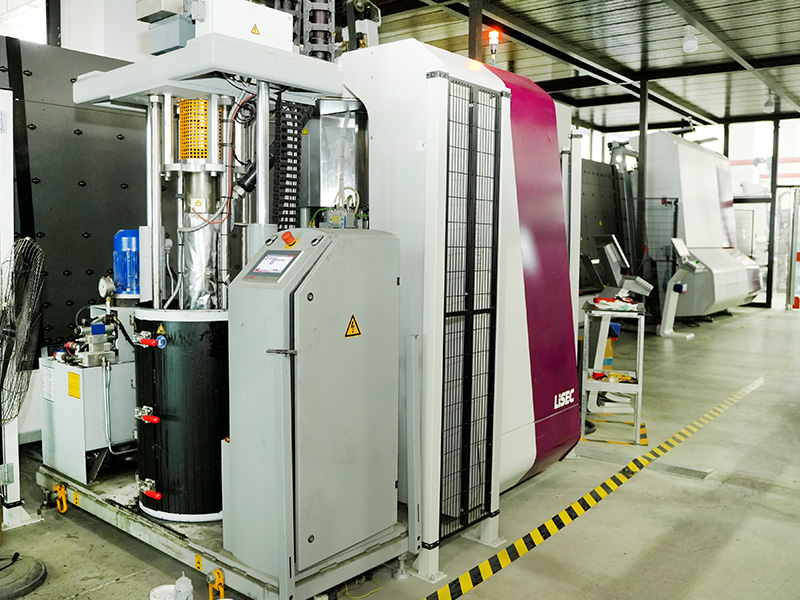
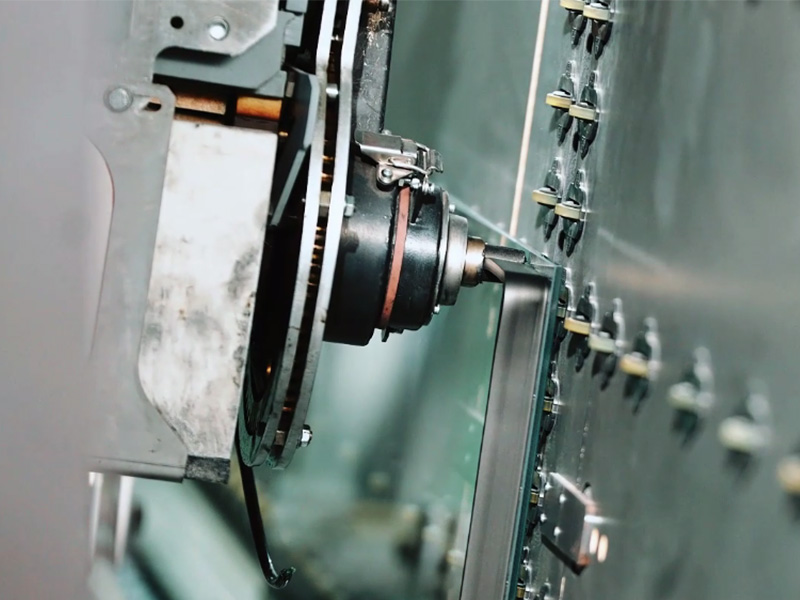
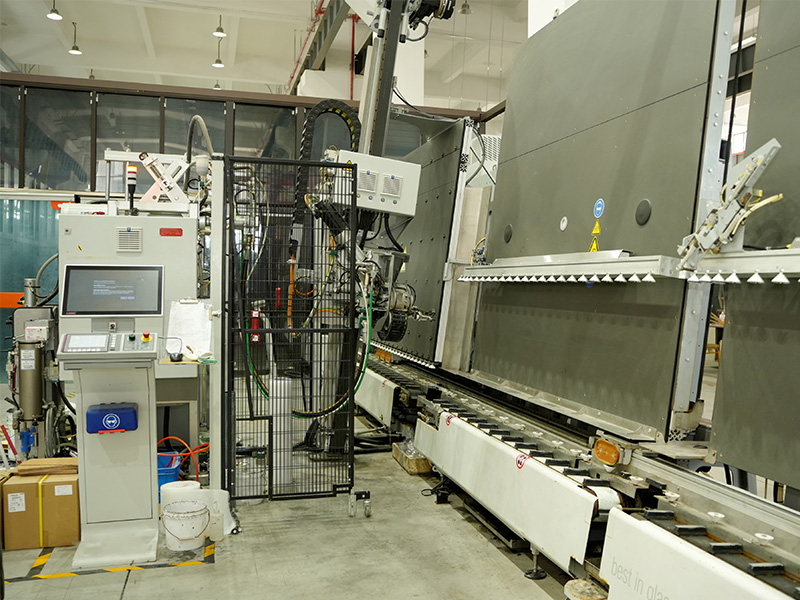
The first adhesive used is a specialized butyl adhesive, which forms a strong chemical bond with the glass, ensuring high performance and durability. The Liesc automatic equipment from Austria evenly applies it to the glass, forming a warm-edge spacer.
Step 6: Argon filling and wafer bonding
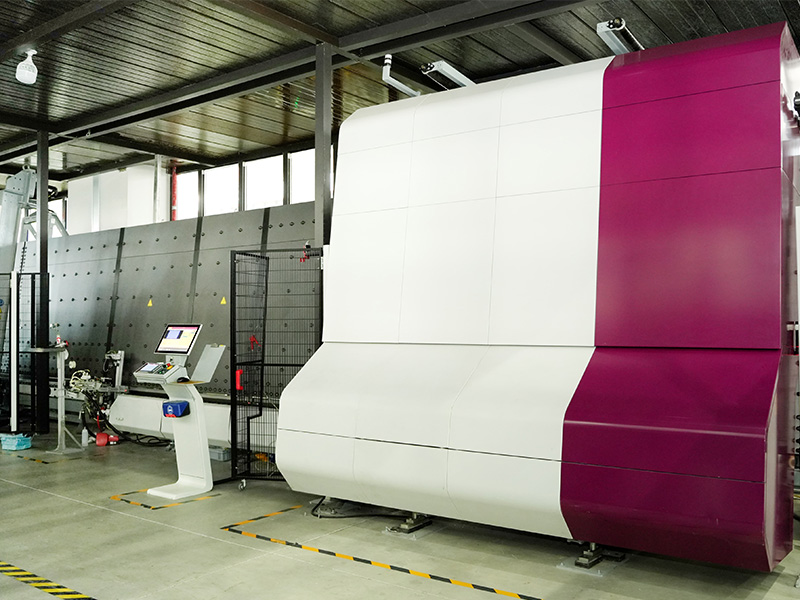
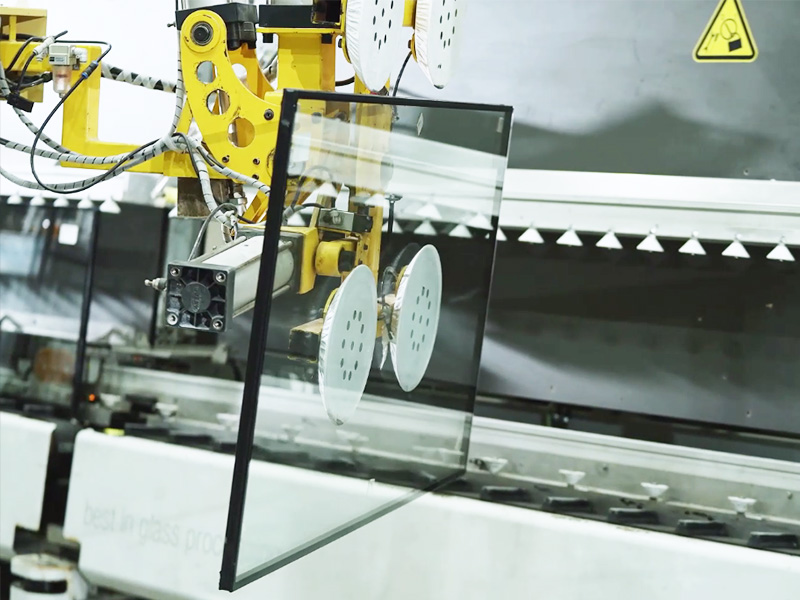
To further enhance performance, the glass cavity is filled with argon gas. Subsequently, two or more glass sheets are assembled together, a process also carried out by automated equipment.
Step 7: Apply the second layer of sealant
The second layer of glue is silicone sealant, which is applied automatically by the equipment. The second layer of glue adheres closely to the first layer.
Step 8:the final step
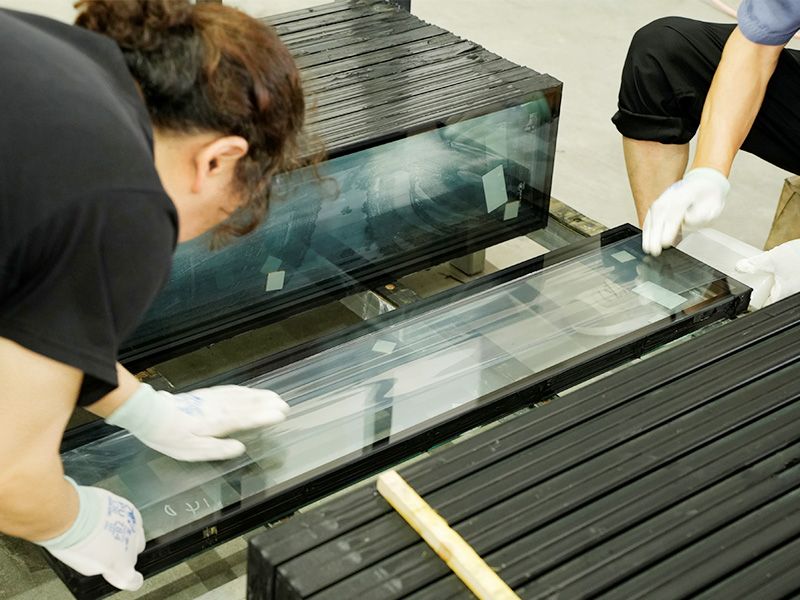
Finally, the glass is removed from the production line for coating and packaging. At this point, a high-quality, high-performance insulating glass is completed.

 +86 15995260370